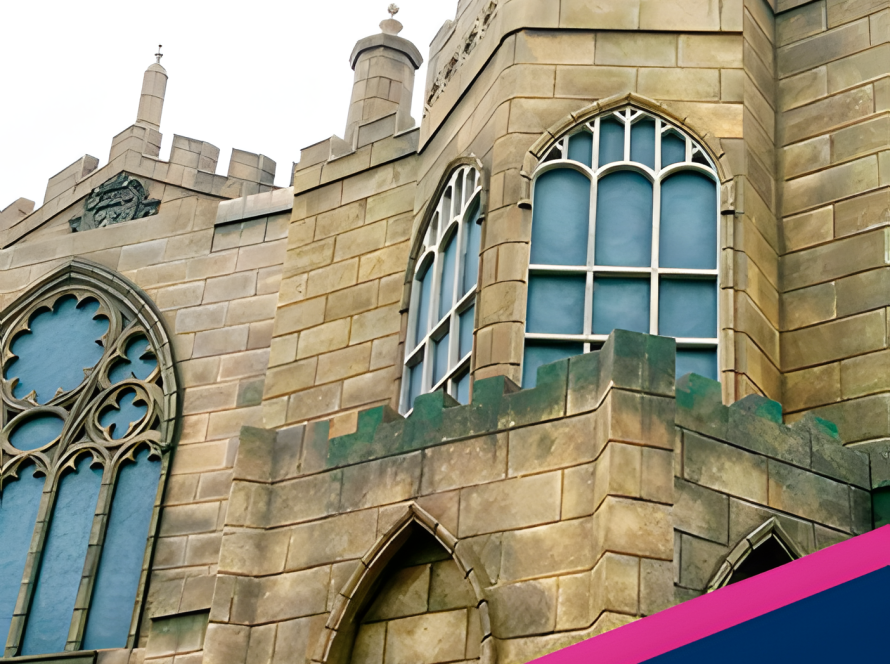
How storytelling, themed environments, attractions, F&B, retail and live entertainment come together to create truly immersive destinations.
What if the experience never stopped?
Imagine stepping into a place where every detail belongs to the same story.
The architecture establishes the setting. The sounds and lighting shape the atmosphere. A restaurant feels like a natural part of the world around it. A shop becomes a place of discovery. A live performance unfolds unexpectedly in the street.
And when the ride ends, the experience continues.
This is the ambition behind a new generation of experience-led destinations: creating environments where attractions, food and beverage, retail, entertainment and public spaces are not separate components, but interconnected expressions of one creative vision.
The objective is not simply to build a themed destination. It is to create a world that feels real enough to step inside.
From Watching a Story to Living Inside It
Cinema has the ability to transport audiences into entirely different worlds. Every location, object, sound and visual detail contributes to the illusion.
Themed entertainment takes that ambition one step further.
Instead of watching the story unfold on a screen, visitors physically enter the environment. They move through it, interact with its elements and experience it from their own perspective.
This creates a unique design challenge.
Unlike a film set, which is built around controlled camera angles, a themed environment must remain convincing from multiple viewpoints and at different distances.
Guests can approach the scenery, examine its textures, enter its buildings and discover details that might otherwise remain hidden.
To sustain immersion, the world needs a consistent visual, emotional and narrative identity.
And that identity must extend far beyond the main attraction.
One Story. Multiple Experiences.
The most convincing immersive destinations are built around a unified creative vision.
Every component has its own function, but all contribute to the same fictional reality.
Attractions: The Emotional High Point
Rides often provide some of the most intense moments within a destination.
Movement, scale, technology, scenic environments and audiovisual effects combine to create excitement, anticipation and surprise.
But a ride becomes even more powerful when the surrounding environment has already introduced guests to its world.
The experience begins before boarding and continues after leaving.
Food & Beverage: Making the World Tangible
A themed restaurant should feel like a place that naturally exists within the destination.
Its architecture, materials, lighting, furniture, menus and service can all reinforce the story.
Even subtle sensory elements, such as sound, aroma and atmosphere, contribute to the experience.
The goal is not simply to decorate a restaurant according to a theme. It is to make dining feel like another chapter of the journey.
Retail: Extending the Narrative
Shops can become workshops, marketplaces, trading posts or other spaces that belong to the fictional environment.
Scenic details, display systems, objects and materials help transform a commercial function into an immersive encounter.
Visitors are not just entering a store. They are exploring another part of the world.
Live Entertainment: Bringing the Environment to Life
Performances introduce something that architecture alone cannot provide: unpredictability.
Music, movement, theatrical interactions and spontaneous moments make the destination feel active and inhabited.
A performance does not always need a dedicated stage. Sometimes, the most memorable encounter happens unexpectedly while guests are walking through a street or public square.
These interactions reinforce the feeling that the world continues to exist beyond the scheduled attractions.
The Spaces Between Experiences Matter
One of the most important aspects of immersive destination design is often overlooked: the spaces connecting individual attractions.
Streets, plazas, pathways, queues and transitions are not simply circulation areas.
They are opportunities to develop atmosphere and guide emotions.
A narrow passage can build anticipation. An open plaza can create a moment of discovery. A change in lighting or sound can signal a shift in the narrative.
Architecture and environmental storytelling influence not only what visitors see, but also how they feel as they move through a destination.
When these spaces are carefully designed, the experience becomes continuous.
There is no clear moment when the attraction ends and the rest of the destination begins.
Emotional Continuity: The Invisible Connection
Visual consistency is essential, but truly immersive environments require something deeper.
They need emotional continuity.
A destination may move visitors through excitement, curiosity, tension, wonder and relaxation. Each environment can create a different emotional response while remaining connected to the same narrative identity.
The intensity of a ride may give way to the warmth of a themed restaurant. A quiet street may lead to an unexpected performance. A retail environment may encourage guests to explore objects and details that deepen their understanding of the fictional world.
These changes create rhythm.
The challenge is to ensure that transitions feel intentional rather than disconnected.
When storytelling, architecture, lighting, sound and guest experience are developed together, emotional continuity becomes part of the destination’s design.
Behind the Illusion: The Importance of Integration
Creating an immersive world requires much more than a strong creative concept.
It demands the coordination of multiple disciplines.
Architecture establishes the physical environment. Scenic fabrication brings surfaces, textures and details to life. Engineering makes complex structures and systems possible. Lighting, audiovisual technology and special effects shape the atmosphere.
At the same time, operational requirements must be integrated without interrupting the narrative.
Guest circulation, accessibility, safety, durability and maintenance are essential to ensuring that the environment performs as intended.
This is where an integrated design and build approach becomes particularly valuable.
When creative, technical and production teams collaborate from the earliest stages, every element can be developed as part of a coherent whole.
The result is an environment where the complexity behind the experience remains largely invisible.
Beyond the Ride. Into the Story.
The future of themed entertainment is not defined only by increasingly spectacular attractions.
It is also shaped by the ability to connect different experiences within a single, believable world.
A world where architecture tells stories, restaurants reinforce atmosphere, shops invite exploration and performances bring environments to life.
Where every transition matters and every detail has a purpose.
Where visitors are no longer simply moving between attractions, but exploring a destination that feels alive.
Because the most powerful immersive experiences don’t end when the ride does.
They continue everywhere the story takes us.